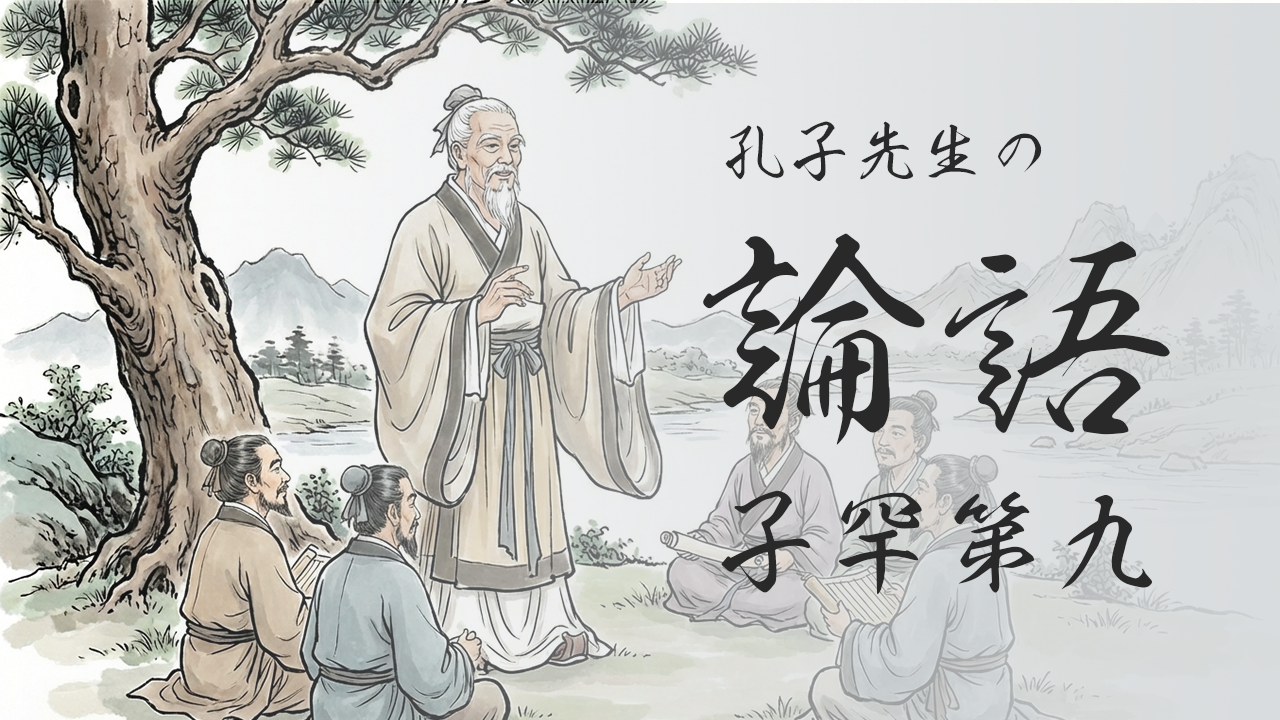
孔子先生は利益、運命、仁についてはめったにお話をされなかったといいます。利益は「先義後利」で、自分の役割である義を果たすことが先で、利益はその結果にすぎないから。運命は甘んじて受けるものではなく、自分で切り開く「立命」が儒家の眼目ですが、立命は孔子先生の人生そのものです。最高の徳目である「仁」は身をもって感じて実践するものだから、大義名分のようなことはお話されませんでした。
Confucius: Teaching Through Practice, Not Just Words
It is said that Confucius rarely spoke about profit, destiny, or benevolence. Regarding profit, he taught “righteousness before gain”—fulfilling one’s duty comes first, while profit is merely the result. Destiny is not something to be passively accepted; rather, the Confucian ideal is to “establish one’s destiny” by forging it oneself. Master Confucius’s life itself was the embodiment of establishing one’s destiny. As for benevolence, the highest virtue, it is something that must be personally felt and put into practice; therefore, he did not speak of it in terms of abstract moral doctrines or ideological justifications.
漢文と書き下し文
子罕言利與命與仁。
子(し)、罕(まれ)に利(り)と命(めい)と仁(じん)とを言(い)う。
現代語訳
孔子先生は、利益、運命、仁といったことはまれにしかお話されなかった。
解説
- 罕(まれ)に:稀に、ごくたまに
- 利(り):利益
- 命(めい):運命・宿命
- 仁(じん):思いやり。いつくしみ。なさけ。儒教における最高徳目で、他人と親しみ、思いやりの心をもって共生を実現しようとする実践倫理。