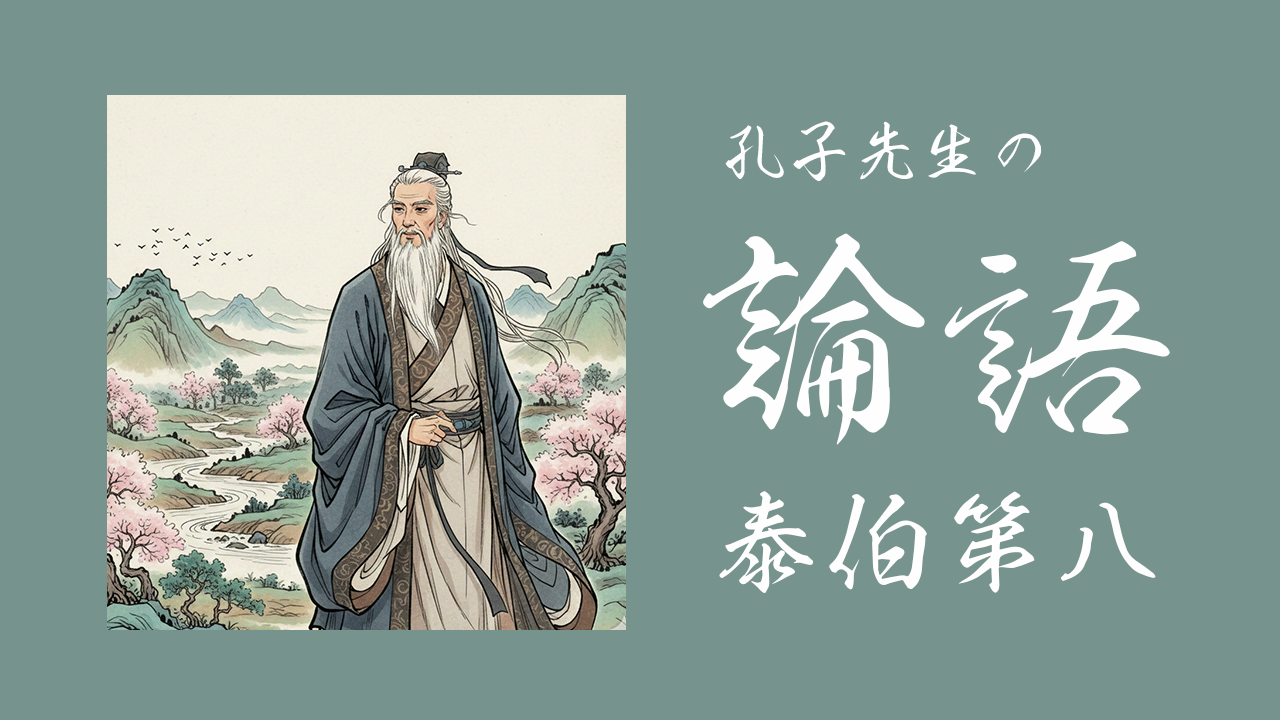
音楽好きの孔子先生が名演奏家の演奏を評して、ひろびろとした音があふれるようだとおっしゃいました。儒家は社会の秩序を定めて行いを戒める礼と、音をもって節度ある心を表わし、人心をやわらげ感化する音楽=楽の「礼楽」を尊重しました。「礼楽」は知識人の教養としての六芸 (礼、楽、射、御、書、数) のはじめにおかれ、中国人の芸術観の根本といえます。
The Music Confucius Loved and the Philosophy of Ritual and Music
Confucius, a lover of music, once praised a master performer’s playing, saying it was as if vast sound were overflowing. Confucians revered the system of “ritual and music” (礼楽): ritual (礼) established social order and regulated conduct, while music (楽), through sound, expressed a balanced and disciplined heart, softening and morally influencing people. “Ritual and Music” was placed at the forefront of the Six Arts (ritual, music, archery, charioteering, calligraphy, and mathematics) as the foundation of a scholar’s education, and may be regarded as the bedrock of the Chinese conception of art.
漢文と書き下し文
子曰、師摯之始、關雎之亂、洋洋乎盈耳哉。
子(し)曰(いわ)く、師摯(しし)の始(し)は、関雎(かんしょ)の乱(らん)、洋洋乎(ようようこ)として耳(みみ)に盈(み)てるかな。
現代語訳
孔子先生はこのようにおっしゃった。名演奏家の摯楽団長が演奏した序曲は、詩経の冒頭「関雎」の変奏曲で、そのひろびろとした演奏は音があふれるようであった。
解説
- 師摯(しし):楽団長の摯、名音楽家/演奏家の摯
- 始(し):序曲
- 関雎(かんしょ)の乱(らん):詩経の冒頭「関雎」の変奏曲
- 洋洋乎(ようようこ)として:ひろびろとして
- 耳(みみ)に盈(み)てる:音があふれる