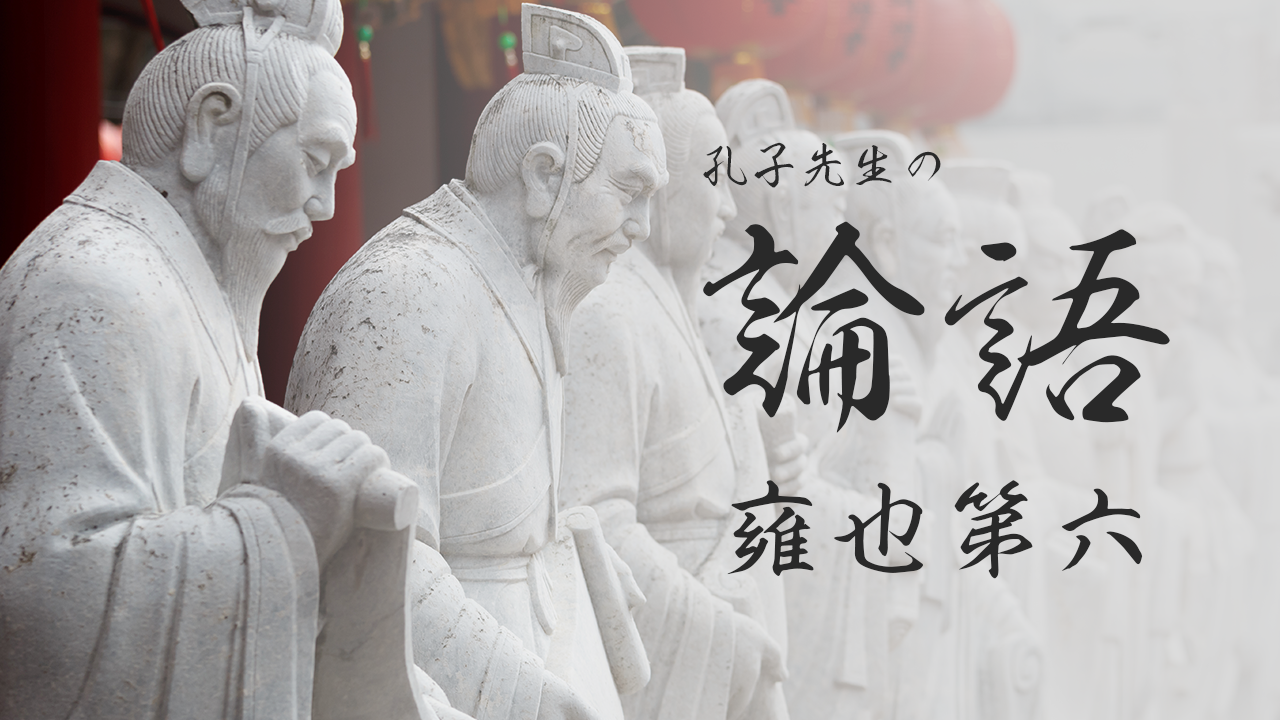
孔子先生が生きた春秋時代は、諸侯が覇を争う乱世でした。そんな時代においても、先生は学問に志すりっぱな人は広く古典などから学んで、その学びを集約して実践するには礼をもってすれば、道理から外れることがないとおっしゃいます。孔子先生の礼とは、必ずしも今の現実社会の秩序に従うということではなく、古来の聖人の行いに見られる高い規範を、学んだ人が自ら体得し、それを実践して生きることで社会と調和し、人間関係や社会秩序を回復するためのプロセスでもあったようです。
Learning and Practice as a Path to Restoring Order
The Spring and Autumn period in which Confucius lived was a turbulent age when feudal lords contended for supremacy. Even in such times, Confucius taught that a person of noble aspiration in learning should study widely from the classics and other sources. By integrating this knowledge and putting it into practice through ritual propriety (li), one would not deviate from the Way. Confucius’s understanding of li did not simply mean conforming to the social order of his own day. Rather, it was a process by which lerners internalized the lofty standards embodied in the conduct of the ancient sages, practiced them in their own lives, and thereby brought harmony to society, restoring human relationships and social order.
漢文と書き下し文
子曰、君子博學於文、約之以禮、亦可以弗畔矣夫。 子(し)曰(いわ)く、君子(くんし)は博(ひろ)く文(ぶん)を学(まな)び、之(これ)を約(やく)するに礼(れい)を以(もっ)てせば、亦(また)以(もっ)て畔(そむ)かざる可(べ)きか。
現代語訳
孔子先生はこのようにおっしゃった。「学問に志すりっぱな人はひろく古典から学び、学びを集約して実行するときには社会生活の規範である礼をもってやりすぎ、やらなすぎを判断すれば、道理から外れることはないだろう。」
解説
- 君子(くんし):学問をする人、文を学ぶ人のこと
- 文(ぶん):学問、教養。四書五経などの古典。
- 約(やく)する:学んだことを集約して、実行する
- 礼(れい)を以(もっ)て:秩序を持ってやりすぎ、やらなすぎを判断する。礼は礼儀作法や制度など、社会生活上の規範。
- 畔(そむ)かざる:道理から外れない