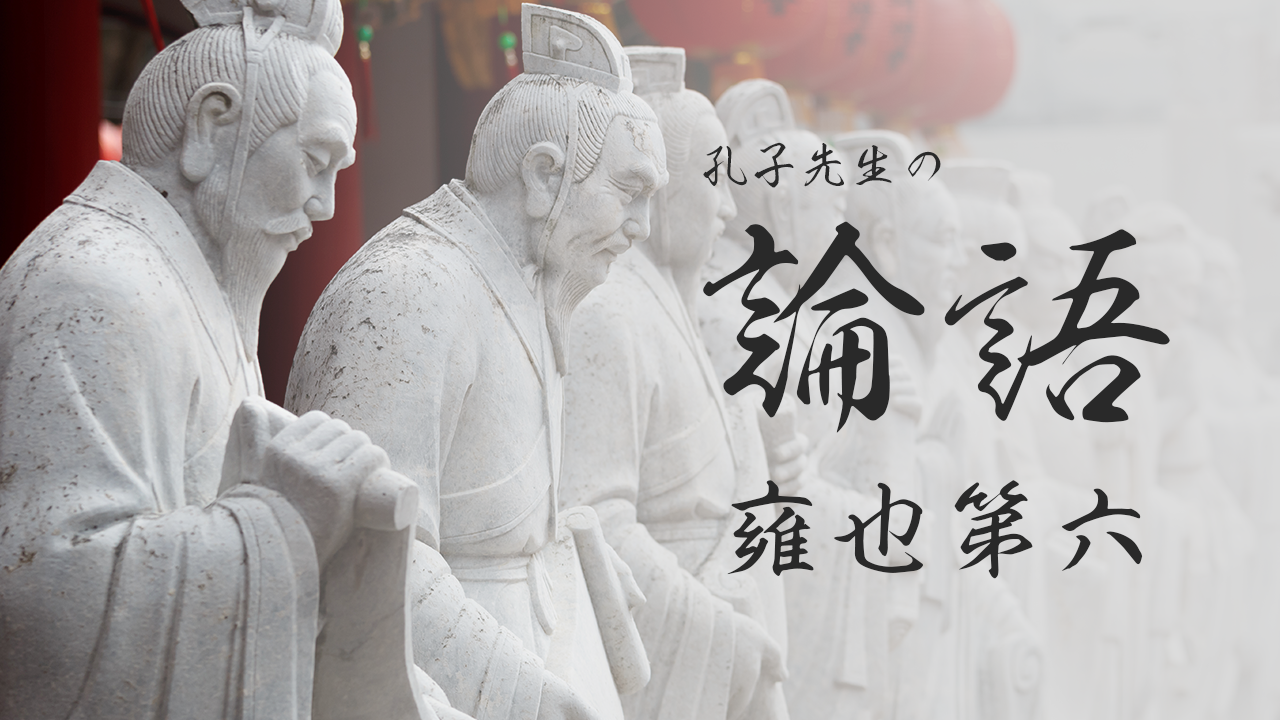
孔子先生は、生まれつきの素質はいいけど、教養が足りないと粗野になってしまう、でも教養が勝って生まれつきの素質を忘れてしまうと役人みたいになってしまう、だから素質と教養が調和して、充実した人がりっぱな人なのだとおっしゃいます。
技能、技術、能力といった外面的なことだけでなく、人間として生まれてきて天から授かった人間性、自分だけが授かった天性・天分を大切にしないとせっかく人間に生まれてきた意味がない、というのが儒家の基本概念です。
To Become a Noble Person through the Harmony and Fulfillment of Substance and Refinement
Confucius teaches that while a person may be endowed with fine natural qualities, without cultivation they become rough and crude. On the other hand, if cultivation dominates to the point that one forgets one’s innate nature, one becomes rigid, like a mere bureaucrat. True nobility lies in the harmony of natural endowment and cultivated learning.
At the heart of the Confucian tradition is the idea that it is meaningless to be born human if one values only external skills and abilities, without cherishing the innate human nature and unique endowments bestowed by Heaven.
漢文と書き下し文
子曰、質勝文則野。文勝質則史。文質彬彬、然後君子。 子(し)曰(いわ)く、質(しつ)、文(ぶん)に勝(か)てば則(すなわ)ち野(や)なり。文(ぶん)、質(しつ)に勝(か)てば則(すなわ)ち史(し)なり。文質(ぶんしつ)彬彬(ひんぴん)として、然(しか)る後(のち)に君子(くんし)なり。
現代語訳
孔子先生はこのようにおっしゃった。「生まれながらの素質が教養に勝っているのは粗野である。教養が素質に勝ると役人のようになる。教養と素質が調和し、充実して、はじめてりっぱな人となる。」
解説
- 質(しつ):実質。生まれながらに持っている性格や才能。素質。資質。飾りけのないこと。素朴なこと。
- 文(ぶん):外見を美しくするための飾り。学芸。学問。
- 野(や):野蛮、粗野、あらあらしい、自然のまま
- 史(し): 古代、朝廷で記録・文書をつかさどった役。また、その役人。
- 彬彬(ひんぴん):外形と内容とが調和し、充実しているさま。