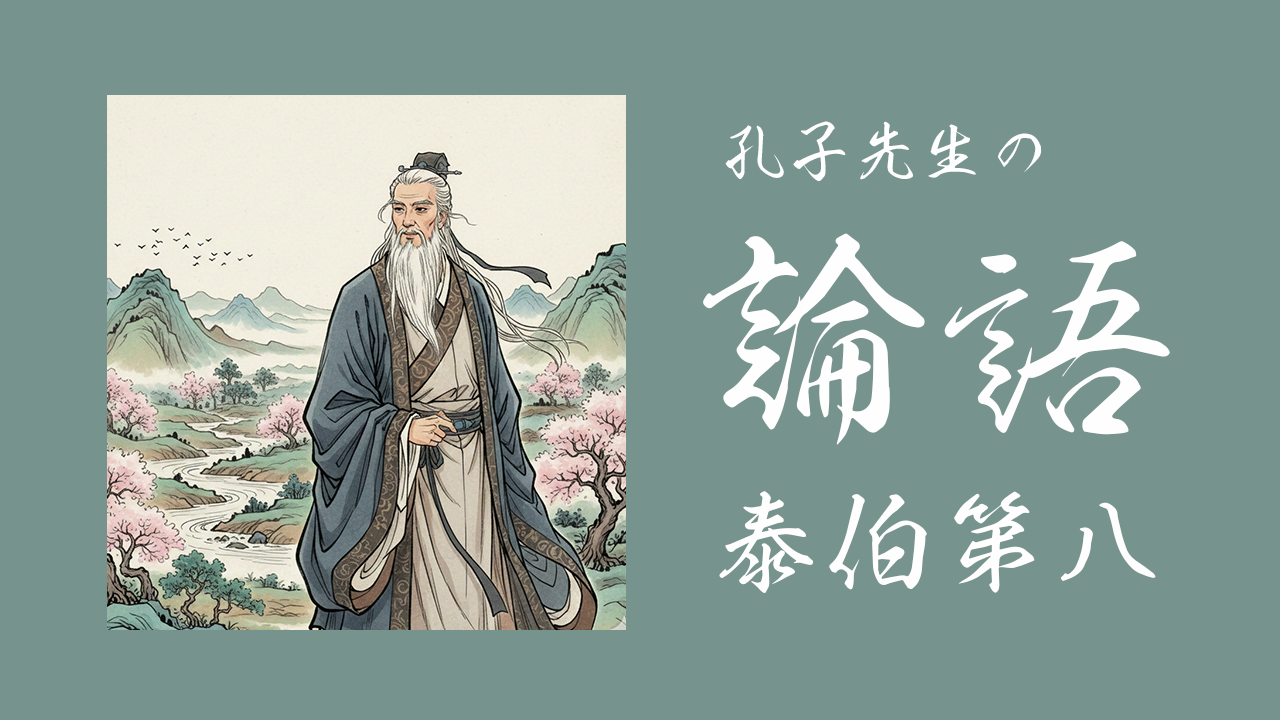
孔子先生は、古代王朝である周王朝の聖王といわれた文王の叔父、泰伯こそ最高の徳をもった人であったとおっしゃいます。泰伯は王家の長男であり、本来王位を継承すべき立場にありましたが、甥の文王の優れた才能を父王が評価していることを知ると自らは次男と共に身を隠し、末の弟で文王の父親である季歴(きれき)に位を譲りました。
泰伯が身を引いたことで、後に周王朝の民は文王による優れた治世で多大な恩恵を受けることとなりましたが、何も知らない国民は泰伯を称賛することはありませんでした。
泰伯は文王の優れた才覚を見抜く鋭敏さを持ち、誰に知られることも、評価されることもなく、それでも多くの人のよろしきのために自分の人生は投げ打つ生き方をしたことを、先生は「最高の徳である」と評価されたのですね。
Living for the Good of Many Is the Highest Virtue
Confucius taught that Taibo—the uncle of King Wen, revered as a sage ruler of the ancient Zhou dynasty—was a man of the highest virtue. Although Taibo was the eldest son of the royal house and should by right have inherited the throne, when he realized that his father recognized the exceptional talent of his nephew Wen, he withdrew from public life together with his second brother and yielded his position to his youngest brother, Ji Li, who was King Wen’s father.
Because Taibo stepped aside, the people of the Zhou dynasty later came to enjoy the great benefits of King Wen’s exemplary rule. However, the people, unaware of Taibo’s actions, never praised him for this.
Taibo possessed the discernment to recognize King Wen’s outstanding abilities, and though he was never known or praised by anyone, he nonetheless chose a way of life in which he gave up his own prospects for the good of many. It is this, Confucius explained, that constitutes “the highest virtue.”
漢文と書き下し文
子曰、泰伯其可謂至德也已矣。三以天下讓、民無得而稱焉。
子(し)曰(いわ)く、泰伯(たいはく)は其(そ)れ至徳(しとく)と謂(い)う可(べ)きのみ。三(み)たび天下(てんか)を以(もっ)て譲(ゆず)り、民(たみ)得(え)て称(しょう)する無(な)し。
現代語訳
孔子先生はこのようにおっしゃった。周王朝の聖王である文王の叔父、泰伯こそ最高の徳をもった人であったと言わなければならない。(本来王位を継承すべき長男であったのに)天下を継承することを固辞して自分は去り、(それによって弟に王位を継承し、その子文王の優れた治世を実現して民に恩恵を与えたが、何も知らない)国民は誰も泰伯のことを称賛しなかった。
解説
- 泰伯(たいはく):周の文王の叔父で長男であり、本来君主の位を継ぐべき人だったが、文王の父親である末の弟、三男の季歴(きれき)に位を譲った。季歴の子の文王が優れた子であったため、父親の古公亶父(ここうたんぽ)が後を継がせたいと考えていることを察したため、次男と共に身を隠した。参考:Wikipedia 太伯・虞仲
- 至徳(しとく):最高の徳。
- 三(み)たび天下(てんか)を以(もっ)て譲(ゆず)り:天下を固辞して去った
- 民(たみ)得(え)て称(しょう)する無(な)し:民は(文王の治世により恩恵を受けたが、誰も泰伯のことは)称賛しなかった。